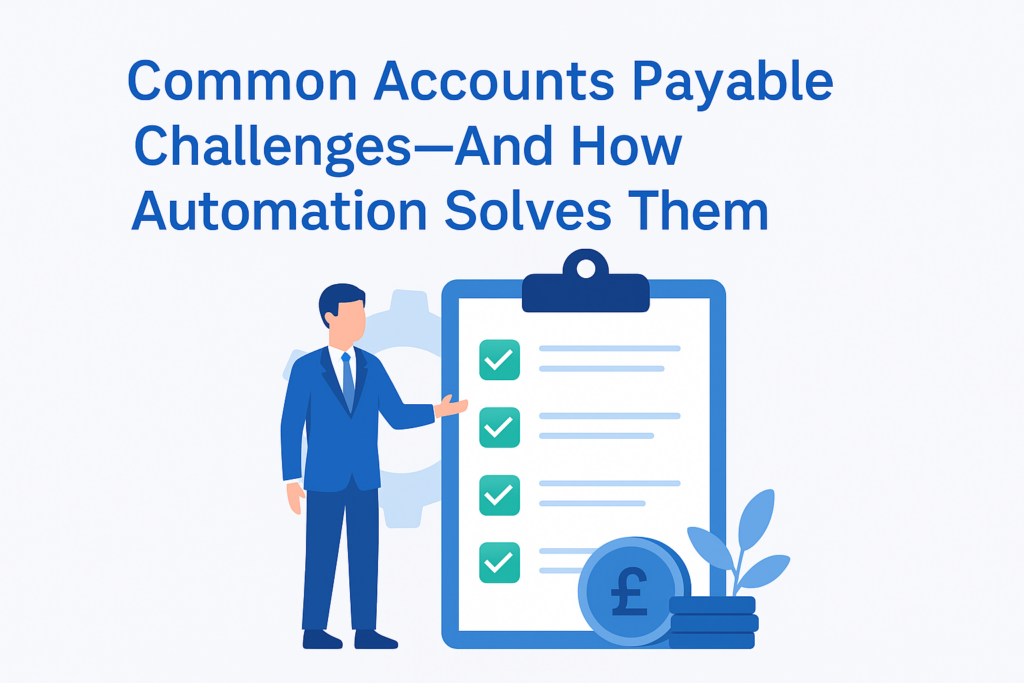
Accounts Payable (AP) can be one of the most resource‑intensive areas within finance. Despite being essential to cashflow, supplier relationships, and financial accuracy, many AP teams still rely heavily on manual processes that slow operations, increase risk, and drive up costs.
However, many of challenges can be solved, quickly and cost‑effectively with automation. Manual invoice processing costs compared with automated costs show a huge saving. Costs can be as much as £30 per invoice down to £3 according to AccountingWeb. Listed below are some of the pain points we understand AP teams face and how implementing AP automation solves it by transforming efficiency, accuracy, and control.
1. High Levels of Manual Data Entry
The first hurdle is manual data entry. Often, even with some form of data capture there is a large amount of rekeying, This could be down to inaccurate data capture solutions or lack of full integration with a finance system. AP teams can spend hours entering invoice details, matching documents, and manually validating data. Manual data entry is prone to errors such as duplicated invoices, incorrect coding, and missing PO references.
How Automation Solves It
Intelligent invoice capture technology eliminates manual input by extracting data from invoices, in any of format, with accuracy rates often exceeding 90%. Intelligent validation rules flag exceptions instantly and can be set to reject invoices at source if they fail validation. AP Teams can then focus on approvals and anomalies rather than routine data entry. This first step significantly improves accounts payable process improvement and boosts productivity across the finance team.
2. Slow Invoice Approvals and Bottlenecks
Delayed approvals are another headache for AP teams. Paper-based workflows, email chains, and unclear approval responsibilities cause invoices to stall for days or weeks. These delays lead to missed early-payment discounts, strained supplier relationships, and unnecessary queries.
How Automation Solves It
Automated workflows route invoices instantly to the right approvers based on defined business rules. Reminders, mobile approvals, and audit trails make the process faster, smoother, and fully transparent. Managers can approve from anywhere (ideal for remote work environments) This reduces cycle times dramatically and eliminates bottlenecks that frustrate both suppliers and finance teams.
3. Limited Visibility and Reporting
When AP data is spread across spreadsheets, email threads, and filing cabinets, it becomes nearly impossible to track invoice status, spend patterns, or upcoming liabilities. Finance leaders lack real‑time insights for forecasting, risk management, and performance measurement.
How Automation Solves It
AP automation creates a centralised digital hub for all invoices, approvals, and payments. Real‑time dashboards and reporting give finance teams immediate visibility into cashflow, outstanding liabilities, supplier performance, and team productivity. These insights empower better strategic decision‑making and reduce end‑of‑month chaos.
4. Frequent Errors, Duplicates, and Compliance Risks
Manual processes increase the risk of duplicates, incorrect payments, VAT errors, missing documentation, and non‑compliance with audit requirements. UK enterprises operating across multiple jurisdictions face additional pressure to maintain clear, traceable financial documentation.
How Automation Solves It
Automation platforms automatically detect duplicate invoices, enforce PO‑matching rules, validate VAT information, and maintain a full audit trail for every action. This drastically reduces costly errors, strengthens compliance, and ensures your organisation is always audit‑ready.
5. High Processing Costs
Manual AP processes are expensive. Handling a single invoice can cost significantly more when printing, posting, storage, staff time, and error correction are factored in. As invoice volumes increase, these inefficiencies multiply, creating long-term budget stress.
How Automation Solves It
Automating invoice capture, validation, matching, and approval eliminates many of the manual steps that inflate processing costs. Enterprises can scale AP operations without increasing headcount, reduce late-payment penalties, and free staff for more valuable work. Over time, the cost savings alone often justify the transition to accounts payable automation solutions.
6. Supplier Queries and Relationship Strain
Lost invoices, approval delays, and poor visibility often lead to frustrated suppliers and a flood of status queries. AP teams spend countless hours manually tracking invoice statuses or responding to supplier calls, time that could be spent on strategic tasks.
How Automation Solves It
Automation provides real‑time visibility for AP teams often offering supplier portals for full visibility for suppliers of invoice status or automated notifications, reducing inbound queries. Suppliers experience faster, more predictable payments, strengthening long-term relationships and reducing administrative friction.
The Path Forward: Transforming AP With Automation
Whether the challenge is manual data entry, approval delays, compliance pressure, or poor visibility, the root of most accounts payable inefficiencies is reliance on outdated, manual processes. Modern AP automation solutions streamline every stage of the invoice lifecycle, from capture to posting for payment, while improving control, accuracy, and cost efficiency.
Increasing workloads, regulatory reporting and the push toward digital transformation, organisations that automate now will be better positioned to scale, optimise cashflow, and support business growth in the future.
Get in touch the Listening team and let us show you ‘How automation solves it!’